Hair Restoration for Women on the Gold Coast
Thinning hair affects around one in three women during their lifetime. At our Bundall clinic, we provide discreet, personalised solutions — from medical therapies to doctor-performed FUE transplant.
Thinning hair affects around one in three women during their lifetime. At our Bundall clinic, we provide discreet, personalised solutions — from medical therapies to doctor-performed FUE transplant.
Hair loss in women is far more common than most people realise, yet it is rarely spoken about openly. Women often wait years before seeking help, sometimes because they assume nothing can be done. The reality is that most types of female hair thinning respond to treatment — particularly when addressed early.
At Gold Coast Hair Transplant, we see women at every stage — from early thinning they have only just noticed through to significant loss that has affected their confidence for years. Our approach is always the same: understand what is causing it first, then recommend the most appropriate treatment.
It starts with understanding the cause
The most common pattern in women — hair gradually becomes thinner and less dense across the top of the scalp, often most noticeable where the hair is parted. The front hairline usually stays intact. This is typically genetic and hormone-related, and tends to progress slowly over years.
A sudden increase in shedding — often noticed in the shower or on the pillow — that typically begins a few months after childbirth, surgery, high fever, significant weight loss or emotional stress. This type (telogen effluvium) usually resolves on its own over several months as the hair cycle resets.
Years of tight braids, weaves, buns or extensions can damage follicles around the hairline and temples. When caught early, removing the tension allows recovery. In longer-standing cases the follicle damage is permanent, but the lost areas can often be restored with transplanted hair.
An autoimmune condition causing smooth, round patches of hair loss. It can occur at any age and may resolve spontaneously or with medical treatment. Hair transplantation is generally not appropriate while the condition is active, as transplanted hair may also be affected by the immune response.
Hormonal shifts during perimenopause and menopause can accelerate hair thinning. Declining oestrogen and relative increases in androgens contribute to finer, sparser hair across the scalp. This is one of the more common reasons women seek treatment in their late 40s and beyond.
Low iron, vitamin D deficiency, thyroid disorders, and certain medications can contribute to thinning. These are important to rule out or address because the hair loss may improve once the underlying factor is treated — no transplant or procedure needed.
How we help
Every consultation begins with understanding what is happening and why. We do not recommend treatment without a thorough assessment first.
Your doctor examines your scalp, reviews your medical history, hormonal factors and family history, and measures hair density. Blood tests may be recommended to check iron, thyroid and hormonal levels.
We identify the cause and explain what is realistic. If a transplant is not the right option, we will tell you directly and recommend what would actually help — whether that is medical treatment, lifestyle changes, or a referral to a dermatologist.
For women who are candidates for transplantation, we typically recommend a "no-shave" FUE approach — your existing hair conceals the treated area throughout recovery. For others, medical therapy, PRP, or a combination approach may be more appropriate.
Hair restoration is a process, not a single event. We schedule follow-up reviews and adjust treatment as needed to give you the best possible outcome over time.
When transplantation is appropriate
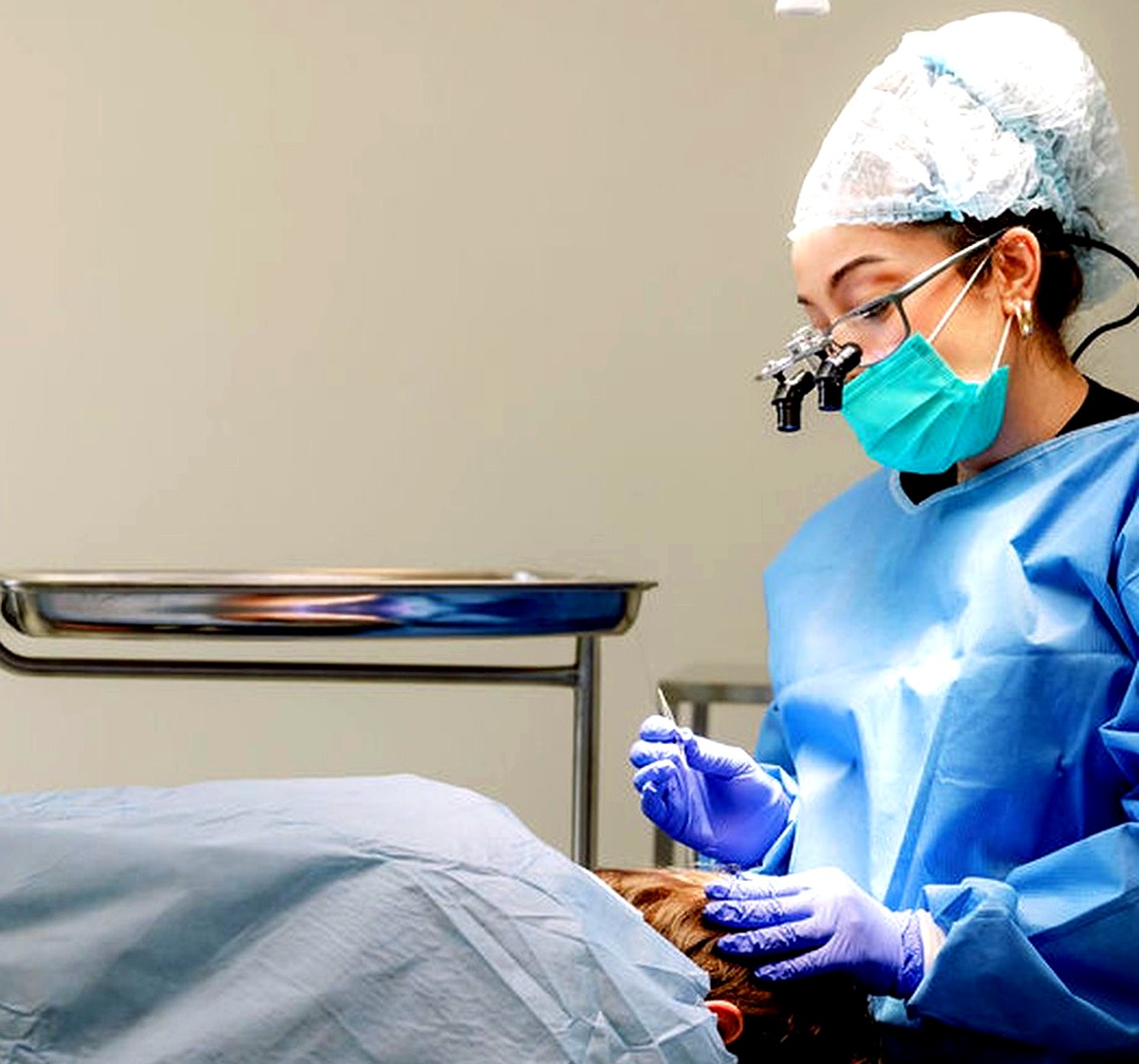
FUE (Follicular Unit Extraction) involves moving individual hair follicles from an area where hair grows densely to an area where it has thinned. No scalpel, no stitches, no linear scar. For women, this is most commonly used to restore density along the part line, rebuild temple areas damaged by traction alopecia, or lower a naturally high hairline.
The key question is whether the donor area — typically the back and sides of the scalp — has enough stable, dense hair to produce a worthwhile result. In women, the donor area can sometimes be affected by the same thinning process, which is why we assess it carefully before recommending surgery.
When FUE is appropriate, results are permanent — the transplanted follicles continue to grow naturally in their new position.
Your privacy matters
We understand that hair loss can feel very personal. Our clinic is a private suite — not a busy medical centre — and consultations are one-on-one with your treating doctor. There are no open waiting rooms and no pressure to decide on the day. Many women find it helpful to bring a partner or friend, and you are welcome to do so.
Hair transplantation is classified as a higher-risk non-surgical cosmetic procedure. Risks include infection, scarring, temporary numbness, poor graft survival and results that do not meet expectations. Not all types of female hair loss are suitable for surgical treatment, and outcomes vary between individuals.
This page is for general information only and does not constitute medical advice. Suitability for any treatment is determined at a face-to-face consultation with an AHPRA-registered doctor.
Confidential consultation
Book a private, no-obligation consultation at our Bundall clinic. Your doctor will listen, assess and give you an honest view of what can help.